Pillar Check #1, the Launch Build
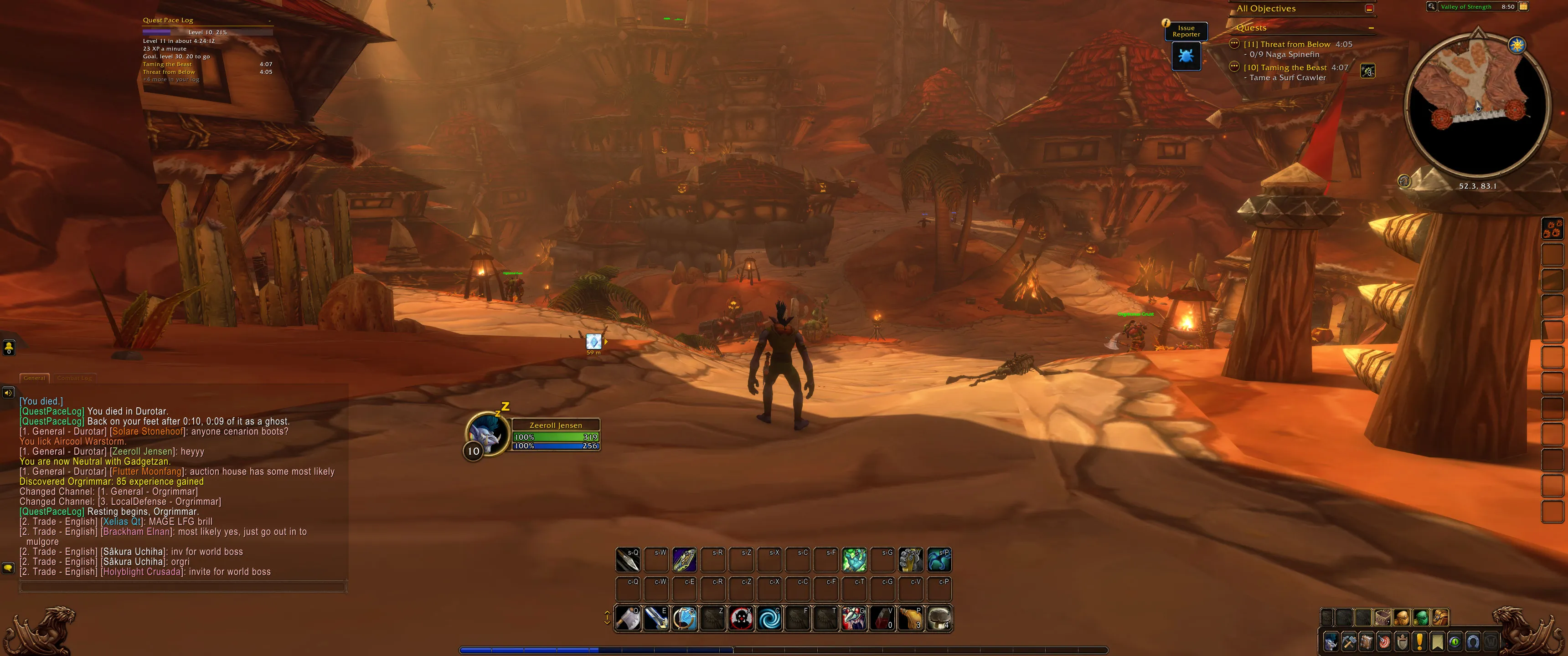
WoW Forever launches on November 4, and the final beta notes arrived two days earlier. They are the biggest set of changes since the beta began. Nearly every talent tree moved, a few spells added in October are already gone, and the racial traits changed again.
That makes this a good first test. Blizzard told TechRadar that the team will “weigh decisions we make against those pillars and if the idea doesn’t support them, we don’t do it.” Pillar Check holds each relevant patch to that promise. This first issue covers the two posts that make up the launch build, the racial update of October 26 and the full update of November 2.
At a glance
- Verdict. Mostly follows the pillars.
- Which pillar won. Fidelity to Classic, but redefined. Blizzard now reads fidelity as avoiding solutions from later expansions, not as keeping Classic’s numbers.
- The change that matters most. The class design statement that drops Classic power budgets, raises damage across the game, and pulls back from Burning Crusade and Wrath of the Lich King ideas.
The standard
Blizzard has named four pillars for WoW Forever. Approachable and familiar, the world as the main character, the journey before the destination, and protecting and nurturing social experiences. Developers have attached narrower rules to them in panels and interviews, such as keeping some of the friction that pushes players together, being “additive and not destructive,” and making new things feel like they always existed. The full list, with sources, is in The Rules Blizzard Wrote for Itself. Each change below is scored as supporting or eroding the pillar or area it touches. Pure bug fixes are left out unless they change how the game plays.
The scorecard
Each notable change is counted once for every row it touches. The last column shows my reading of the October 15 update, the one before this, for comparison.
| Pillar or area | Launch build, supports | Launch build, erodes | October 15, supports and erodes |
|---|---|---|---|
| Approachable and familiar | 4 | 1 | 6 and 0 |
| World as the main character | 1 | 0 | 1 and 0 |
| Journey before destination | 1 | 0 | 0 and 0 |
| Social experiences | 1 | 0 | 1 and 2 |
| Classes and combat | 5 | 1 | 2 and 0 |
| Fidelity to Classic | 4 | 3 | 1 and 3 |
| Progression and power | 1 | 0 | 1 and 0 |
Two things stand out. Classes and combat went from a minor theme to the center of the patch. And fidelity, which mostly lost in October, now wins more often than it loses.
What follows the pillars
| Change | Pillar or rule | Reading |
|---|---|---|
| Damage raised for every class, with higher-level creature health raised to match | Classes and combat | The notes say the goal is “for every class to feel valuable to the groups they join,” by “doubling down on the strengths and differences that make each class unique.” That is the promise of meaningful gaps between classes, stated as policy. |
| Ideas from later expansions removed or reworked, among them Lava Burst and Feral’s Berserk, with Shaman shocks back to Classic values | Fidelity, new things that feel like they always existed | Replaced by new tools built for Forever, such as the Rogue’s Shank and Death Mark and the Paladin’s Oath of Light. |
| Low-rank spells no longer have a reduced chance to trigger talents, except Blizzard, and Frost Blast is removed | Fidelity, classes | Makes down-ranking useful again, a piece of Classic expert knowledge that the October notes had turned into a separate button. |
| Racial identity put first, with Classic traits restored, like the Orc’s Command and the Tauren’s plain 5% Health Endurance | Fidelity, classes | The October 26 notes say “some races will naturally be slightly more effective than others at certain combat roles.” |
| Weapon specialization racials stay gone, now with a reason | Progression and power | Blizzard says it is “not healthy in the long run for future raid and dungeon loot tables to be evaluated through the lens of ‘required’ weapon types.” |
| Faster respawns for the launch rush, to be lowered afterward | Social, approachable | The note says “Some contention for spawns is expected and part of the experience,” and promises a return to “more typical rates” once the surge settles. |
| Quest experience, prerequisites and level settings adjusted “to improve flow across the world” | Journey | Supports a smoother road, though the notes give no numbers. |
| New spells no longer jump onto action bars, and new bags must be equipped by hand | Fidelity, but erodes approachable | Closer to how many players remember the original game, and a little less guided for new players. No reason is given. |
| Training from 1 to 60 now costs about 206 to 207 gold for every class | Approachable | Every class pays about the same to learn its kit. |
| Gamepad support reaches a functional beta, with better add-on compatibility | Approachable | A new way in that changes nothing for anyone else. |
| Righteous Fury now trained at level 10 | Classes, approachable | The note says it “mirrors the level that other Tanks gain access to their tanking stance.” |
| Skyborne’s strongest bonuses now depend on standing at Ley Lines and elemental convergences | World as the main character | The race’s power is tied to places in the world. |
The biggest of these deserves a closer look. Blizzard wrote that holding each class “roughly to Classic power budgets” meant “every new element we added needed to come at the expense of something else.” So it raised damage everywhere and raised creature health to compensate. On its own, that sounds like the start of Retail-style power creep. But the same note admits that in some areas “we were likely hasty in turning to Burning Crusade- or Wrath-era solutions rather than carving out new ones that better fit into the Forever combat model.” The headroom is meant for new ideas that belong to Forever, not for borrowed ones. That’s a sharper definition of fidelity than Blizzard has given before, and it matches developer Jeff Parrott’s test for new content, whether a player would ask “Did this exist in the game?”
What drifts
Salvation is gone, and Blizzard hasn’t said why. In Classic, Blessing of Salvation was one of the Paladin’s signature raid tools. The October 15 notes kept it, split it from the other blessings, and added Revoke, explaining that this was “to restore the functionality of giving the Paladin more finesse and control.” Eighteen days later, Salvation, Mass Salvation and Revoke are all removed, along with Blessing of Light. Tank threat was raised to compensate, and the Bear Form note says so directly, “This is to compensate for Blessing of Salvation being removed.” But the removal itself has no explanation. As of November 3, I found no blue post, interview or developer post that gives one. The general class note about later-expansion solutions doesn’t name it either, and it couldn’t really apply, since Salvation comes from the original game. It cuts against the promise to preserve “meaningful gaps in the class toolkit,” and against Josh Greenfield’s rule to be “additive and not destructive.” It’s the one large departure from Classic in this build that comes with no reason at all.
Departing from Classic power budgets. This one is explained, and I count it as a supported class change. It still erodes fidelity, and it’s worth naming. Higher damage and higher creature health may feel the same in a fight, but they change how gear, consumables and future power gains scale. Clay Stone has promised to keep power jumps between raid tiers “as small as possible.” More headroom makes that promise easier to break later.
Weapon racials, explained but still a loss. Blizzard now gives a real reason for dropping Sword, Axe and Mace Specialization, and it’s a good one. Still, for many Classic players, which race to pick for which weapon was part of the game. The explanation turns an unexplained drift into an explained trade-off. It doesn’t make it additive.
The pattern
This is the first issue, so the comparison is with my reading of the earlier beta notes, which are logged in the same audit document.
On leveling, the journey has won every time it collided with convenience. Dungeon quest experience was cut in October, dungeon creature experience was raised, and summoning stones were refused. The launch build keeps that line. Respawns go up only for the launch rush, with a promise to bring them down.
On classes and races, the October 15 update leaned toward approachable over fidelity. Weapon racials became flat bonuses, Frost Blast replaced down-ranking, and party buffs became raid-wide. The launch build reverses part of that. Down-ranking is back, Frost Blast is gone, Classic racials like Command return, and borrowed ideas from later expansions are pulled out. Fidelity is winning more often than it was three weeks ago.
The bigger change is in how Blizzard explains itself. In the October notes, changes that restored Classic came with reasons and changes that removed it didn’t. This build explains two major departures, the power budget and the weapon racials, in detail. That’s what the decision rule asks for. Salvation is the exception, and raid-wide party buffs are still unexplained.
Outside the pillars, the paid race
Skyborne is sold separately for $30, so its strength matters beyond balance. In October, it received some of the biggest racial buffs of any race. The launch build pulls some back. Its haste bonus drops from 3 to 2 percent, and its regeneration spell is halved to 50 percent unless the player is Attuned at a Ley Line. Blizzard said its October 26 pass was meant to keep racial bonuses from “skewing outcomes in a way that limits player preferences.” Tying a paid race’s best bonuses to places in the world, and trimming its base numbers, is consistent with that. It’s worth checking again once the race is on sale and players can compare.
The strongest counterargument
This much change, this late, is a risk in its own right. The beta was capped at level 30, and Blizzard admits it needs “sufficient data from players leveling past 30” before a large tuning pass. Players who learned a class in the beta will meet a different class at launch. A cautious reading says Blizzard should have shipped fewer changes and let the game settle, which would also have been more approachable.
I think that’s fair, and it’s why the tuning freeze matters. Blizzard says “With the exception of bugs and serious outliers, we don’t plan on making big tuning changes between now and the opening of the raids next month.” It also frames the launch as a starting point, saying classes will “continue to evolve” as they did after 2004. The changes are large, but they move toward a stated goal, distinct classes built from Forever’s own ideas, and that goal is now written down. That’s what makes them checkable.
Verdict
The launch build mostly follows Blizzard’s pillars, and more firmly than the October 15 update. It brings back Classic class knowledge, removes ideas borrowed from later expansions, protects the journey, and keeps spawn competition as part of the social design. Most important, it explains its departures from Classic, not only its returns. It falls short in one place. Salvation, a signature Paladin tool that Blizzard had just defended, disappears without a reason.
What to watch next
- Whether respawn rates in low-level zones actually come down after the launch rush, as promised.
- Whether the tuning freeze holds until the first raids open on December 9, and whether the large tuning pass after that keeps classes distinct.
- Whether tank threat works without Salvation in the first raids, and whether Blizzard explains the removal.
- Whether Skyborne stays in line with other races once it’s on sale.
Method and limits
I read the October 26 racial update, its October 27 correction and the November 2 update, all posted by Kaivax in Blizzard’s WoW Forever Beta Development Notes thread, with the October 15 update for comparison. I scored changes against the pillars and the rules developers have stated since September. The scores are my reading of the notes, not of play, and another reader could score some changes differently.
Further reading
- Blizzard, WoW Forever Beta Development Notes, November 2 update and October 26 racial update
- Blizzard, What’s Next panel recap and Deep Dive panel recap
- TechRadar, the Forever team on its design pillars (October 8, 2026)
- MMORPG.com, BlizzCon 2026 interview with Blizzard (September 15, 2026)
- GameSpot, “WoW Forever aspires to have a Mandela effect on players” (September 22, 2026)
- This Week in Videogames, Clay Stone on raid power jumps (October 12, 2026)
- Kotaku, everything you need to know about WoW Forever (October 28, 2026)
Thoughts on this? Email me